What is Laser Hair Removal?
This procedure allows a care provider to use laser energy to remove unwanted hair and slow the growth of new hair.
How does Laser Hair Removal work?
The beam of the laser with its heat energy is directed at the root of the hair. The laser light penetrates the skin without damaging it, and attacks the dark melanin in the hair follicle, destroying it immediately. Although it may take several treatments over an extended period of time to completely stop hair from regrowing, the hair growth should begin to slow after the first treatment.
What areas of the body does Laser Hair Removal treat?
Areas most commonly treated with Laser Hair Removal systems are the upper lip, chin, and underarm area. Doctors can also perform this procedure on the legs ,bikini area, and other regions of excessive, unwanted hair growth.
What are the advantages of Laser Hair Removal over other similar treatments?
Unlike cream depilatories which must be repeated, Laser Hair Removal may eventually stop all hair regrowth. Even if it does not, the process should allow a patient to remain hair free for several months. Unlike procedures which use chemicals to remove or slow hair growth, there is no chance of an allergic reaction to Laser Hair Removal.
Who is a candidate for Laser Hair Removal?
Laser Hair Removal works best for brunettes with a light complexion, but it can work on other skin types. Usually blondes, red heads, and individuals with dark or deeply tanned skin are not good candidates for Laser Hair Removal. Either the treatment doesn’t work well on these types, or the side effects are much greater, particularly the risks of pigmentation changes and blistering.
How is Laser Hair Removal performed?
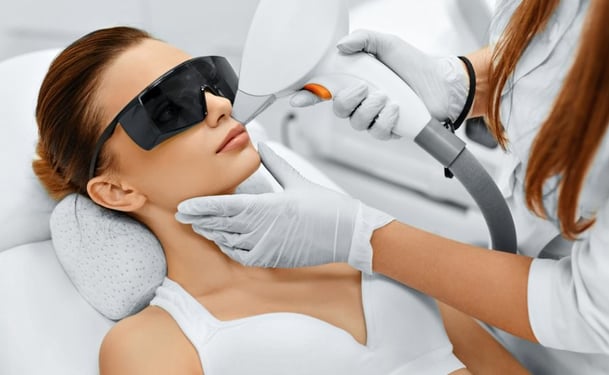
The doctor will first protect the eyes from the laser light with some type of covering. Then, he will apply the laser to the skin being treated. The laser beam penetrates the skin without any damage and heats the hair follicles to a high temperature. During this procedure the doctor may apply a cooling gel or topical numbing agent. The patient may notice a burning smell and feel the skin in the area begin to sting. Depending on how much area is being treated and their locations, this process could take from a few minutes to several hours.
What is the recovery like?
Though the skin may be pink and swollen after Laser Hair Removal, sterile dressings are not necessary. The patient may need to use cool compresses to control the stinging, but over-the-counter medications will usually control any discomfort. Patients are asked to refrain from activities that would cause them to perspire for at least twenty-four hours to prevent irritation. Patients should refrain from sun exposure during the month following this procedure and should wear sunscreen daily. Doctors suggest that patients wait three weeks before doing any treatments such as waxing or plucking hair in the treated area.
What will the results be like?
Twenty to ninety percent of the hair in the treated area will be gone, but the skin may remain pink for a few days. One treatment should keep hair away for several months, but new hair will slowly grow back without further treatment. This hair will be lighter and finer than before. Six to eight weekly treatments may result in stopping the hair growth entirely, but doctors offer no guarantees.
What are the risks?
Side effects from Laser Hair Removal include scarring, blistering, and changes in the texture of the skin. Skin pigmentation is sometimes lighter or darker than before the procedure. There is also a risk that new hair will grow in areas adjacent to the treated region, but these can be treated later.
Is Laser Hair Removal approved for use in the U.S.?
Laser Hair Removal is labeled as safe by the FDA.
Is Laser Hair Removal covered by insurance companies?
Few Laser Hair Removal treatments are considered medical in nature so most are not covered by insurance plans.
Disclaimer: This information is intended only as an introduction to this procedure. This information should not be used to determine whether you will have the procedure performed nor does it guarantee results of your elective surgery. Further details regarding surgical standards and procedures should be discussed with your physician.
By SkinCareGuide.com Staff
Updated: November 24, 2009